A Wave of New Employee SNS Data Leaks in April 2026
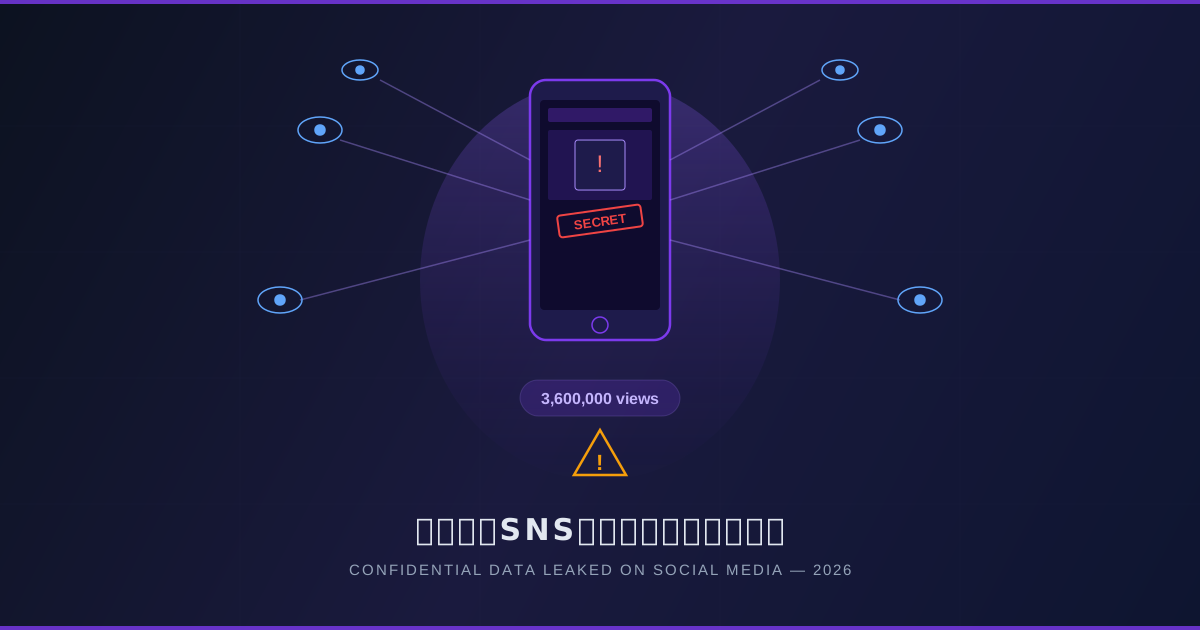
April 2026 saw a series of high-profile data leaks by newly hired employees posting confidential information on social media platforms, raising serious questions about digital literacy and corporate information security.
Case 1: Mitsubishi Electric Living Environment Systems — Instagram Confidentiality Agreement Leak
A new graduate employee at Mitsubishi Electric Living Environment Systems (a subsidiary of Mitsubishi Electric) posted a photo of their confidentiality agreement and employee number on their Instagram Stories shortly after joining the company. The post, captioned with a dismissive comment, went viral and accumulated over 3.6 million views, causing a massive backlash.
Case 2: NTT East — BeReal Shift Schedule Exposure
An NTT East employee inadvertently exposed a shift schedule in the background of a photo posted on BeReal, a social media app that requires users to post a real-time photo within two minutes of receiving a notification. The time pressure inherent to the app makes it easy to overlook sensitive information appearing in the background.
Case 3: Nippon TV ZIP! Production Company — Instagram Post Controversy
A new employee at a production company for Nippon Television's morning show "ZIP!" posted work-related content on Instagram that went viral. The broadcasting industry handles highly sensitive information about talent and programming, making SNS management particularly critical.
Criminal Penalties Under the Unfair Competition Prevention Act
When leaked information qualifies as a trade secret, the Unfair Competition Prevention Act (Act No. 47 of 1993) imposes severe criminal penalties.
Three Requirements for Trade Secret Protection
| Requirement | Description | Examples |
|---|---|---|
| Secrecy management | Information is managed as confidential | Access restrictions, "confidential" labels, locked storage |
| Usefulness | Information is useful for business activities | Customer lists, technical know-how, manufacturing methods |
| Non-public nature | Information is not publicly known | Information not obtainable through normal channels |
Penalties
Under Article 21(1) of the Unfair Competition Prevention Act:
| Target | Penalty |
|---|---|
| Individuals | Up to 10 years imprisonment or a fine of up to ¥20 million, or both |
| Corporations | Fines of up to ¥500 million (dual liability) |
Even a "casual" social media post can trigger criminal liability if the information disclosed qualifies as a trade secret.
Free Tool Related to This Article
Contract Risk Checker
Try our free simulator related to this topic.
Try for free →Employment Rule Violations and Disciplinary Actions
Most companies include confidentiality obligations in their employment rules. Violations can result in disciplinary action.
Types of Disciplinary Action
| Type | Description | Applicable Scenarios |
|---|---|---|
| Reprimand | Verbal or written warning, written apology | Minor negligent leaks, first offense |
| Pay reduction | Temporary salary reduction (subject to Labor Standards Act Art. 91 limits) | Minor intentional rule violations |
| Suspension | Temporary unpaid leave | Leaks damaging company reputation |
| Demotion | Reduction in rank or grade | Serious leaks involving managerial responsibility |
| Recommended resignation | Resignation request; dismissal if refused | Serious trade secret leaks |
| Summary dismissal | Immediate termination (may forfeit retirement benefits) | Intentional, serious, or malicious leaks |
Requirements for Valid Disciplinary Action
Japanese case law requires the following for disciplinary action to be valid:
- Clear basis in employment rules specifying the grounds for discipline
- Proportionality: the punishment must fit the offense
- Due process: the employee must be given an opportunity to explain
- Equal treatment: similar offenses must receive comparable punishment
Potential Liability for Damages
When an SNS leak causes damage to the company, the employee may face damages claims under Article 709 of the Civil Code (tort) or breach of the employment contract.
Potential damages include:
- Reputational damage: loss of business partners, stock price decline
- Response costs: crisis management, press releases, customer communications
- Lost profits: profits that would have been earned but for the leak
However, Japanese case law applies good faith limitations on employer claims against employees, meaning full damages may not always be recoverable (Supreme Court, July 8, 1976, Ibaraki Coal Trading case).
Key Elements of a Corporate SNS Policy
Companies are effectively required to establish guidelines for employee social media use. The following elements should be included at a minimum:
- Scope: applies inside and outside working hours, including personal accounts
- Prohibited conduct: photographing/posting internal documents, ID cards, office interiors, work content, and client information
- Consequences: clear statement that violations may result in disciplinary action and damages claims
- Training: mandatory SNS literacy training at onboarding and annual refreshers
- Consultation channels: a contact point for questions about posting and emergency response procedures for viral incidents
What New Employees Need to Know
What NOT to Do
- Photograph or post internal documents: confidentiality agreements, training materials, manuals
- Share employee numbers or ID cards: also a personal data protection concern
- Take photos inside the office: risk of confidential information in the background
- Post about work tasks: even "here's what I did today" can constitute a leak
- Post anything that identifies your employer: uniforms, branded items, recognizable locations
Pre-Posting Checklist
- Does this post contain any company information?
- Is there anything in the background — documents, screens, whiteboards?
- Could viewers identify your employer from this post?
- Does this comply with your employment rules and SNS policy?
- If this post went viral, would it cause problems?
Summary
The wave of new employee SNS leaks in April 2026 highlights a critical gap: even digital natives may not draw a clear line between social media and workplace information security.
Three key takeaways:
- Even casual posts can trigger criminal liability — up to 10 years imprisonment under the Unfair Competition Prevention Act
- Disciplinary actions are graduated — but serious cases can lead to immediate dismissal
- Companies must establish SNS policies — failure to provide training may constitute employer negligence
Social media posts are not ephemeral. Screenshots persist, reposts multiply, and digital tattoos are permanent. New employees should exercise extreme caution to avoid derailing their careers over a single thoughtless post.
If you are concerned about the legal implications of a post you have made, or if your company needs assistance developing an SNS policy, we recommend consulting with an attorney.